Revitalizing Gurung Language
About This Page
This page describes the history of the Gurung Khema script and the Translation Commons project to help the Gurung community digitize their language. By building Unicode-based fonts, keyboards, and training programmes, this initiative is enabling Gurung Khema speakers to communicate, educate, preserve their culture, use software applications, and access and contribute to global knowledge in their native language.
A Language at Risk
The Gurung people, known among themselves as Tamu, are spread across Nepal’s Gandaki Province, Sikkim state in India, and an increasingly global diaspora driven by migration for work and education. Despite 400,000 speakers, the community lacked a shared digital writing system. Messages, social media, government documents, and educational materials defaulted to Nepali or English languages of wider reach, but not the language of Gurung identity.
Gurung Khema script is the native way of writing the Gurung language. Without support on digital systems, the next generation would lose an important aspect of their cultural identity.
The Unicode standard is the accepted way to represent multilingual text on digital systems. Without support in Unicode, fluent Gurung speakers could not reliably use or share text in the Gurung Khema writing system on a phone or computer. Characters would be missing or erroneous when shared across devices.
Therefore, Translation Commons, in partnership with the Gurung community, developed an initiative to create a Unicode-based keyboard and font supporting their native orthography across the internet and digital systems.
The Language and Its Script
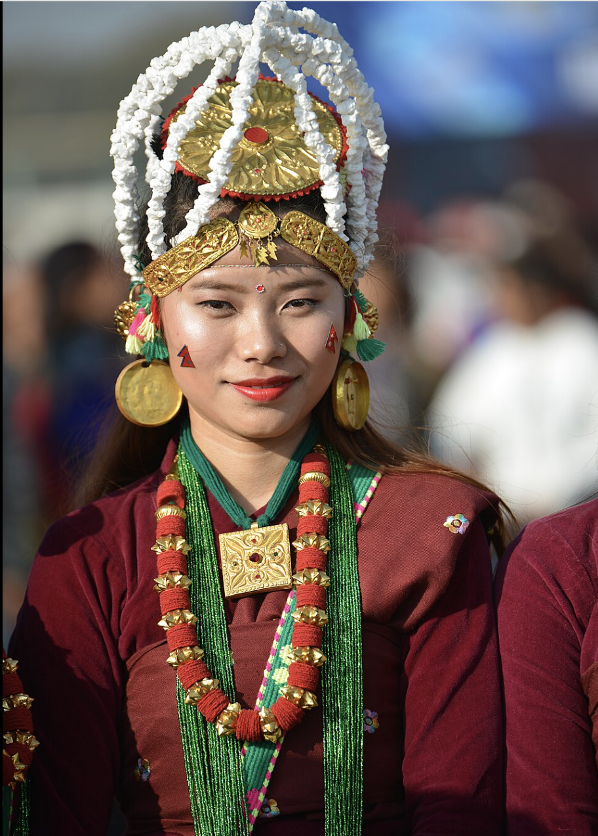
Gurung girl celebrating Tamu Lhosar (Gurung New Year)
Photo Credit: SPakhrin
CC BY 2.0 https://commons.wikimedia.org/w/index.php?curid=106013629
The Gurung Khema script is used to write the Gurung language, spoken by approximately 328,000 people in Nepal according to the 2021 census. Speakers are located primarily in Gandaki Province, with additional communities in Sikkim, India, bringing the broader Gurung ethnic population to an estimated 400,000 across both regions. The script is also known as Khema Phri, Khema Lipi, or Tamu Khema Phri (Tamu being the name the Gurung people use for themselves). This writing system has deep cultural roots in the community’s identity and heritage.
Digital Preservation through Unicode
The inclusion of Gurung Khema in the Unicode Standard makes it possible to type, search, exchange, publish, and preserve the language consistently across websites, software applications, smartphones, and modern operating systems. This milestone ensures the script can continue to grow for future generations while remaining accessible in today’s digital world.
Getting Started
The Gurung Khema script was created in 1977 by Bal Narsingh Gurung, a social worker, cultural activist, and educator dedicated to preserving Gurung heritage under the supervision of Guru Pim Bahadur Gurung. The script was completed in 1978 (2038 BS).
It was formally presented at the first National General Convention of the Tamu Chonj Dhin in Kathmandu in 1995 (2052 BS), where it was recognized as the official writing system of Gurung. In 1997, the State Government of Sikkim also officially recognized Gurung Khema as the Gurung script.
Teaching of the script began in 1996 (2053 BS), led by Bhim Gurung, founding chairman of the Central Committee of Nepal Tamu Vidyarthi Chonj Dhi, in Devdaha, Nepal. The following year, the script was introduced into government schools in Sikkim, India.
A major milestone was achieved when Gurung Khema was included in Unicode 16.0.0 in September 2024, based on a proposal by Biswajit Mandal. With its inclusion in Unicode, the foundation was laid for Gurung Khema to be used across digital platforms. By using a Unicode-based font and keyboard, Gurung Khema text can now be typed, shared, and used across different software. Text in this script can also be labeled and searched using the Gukh code that was added to the ISO 15924 standard for script codes.
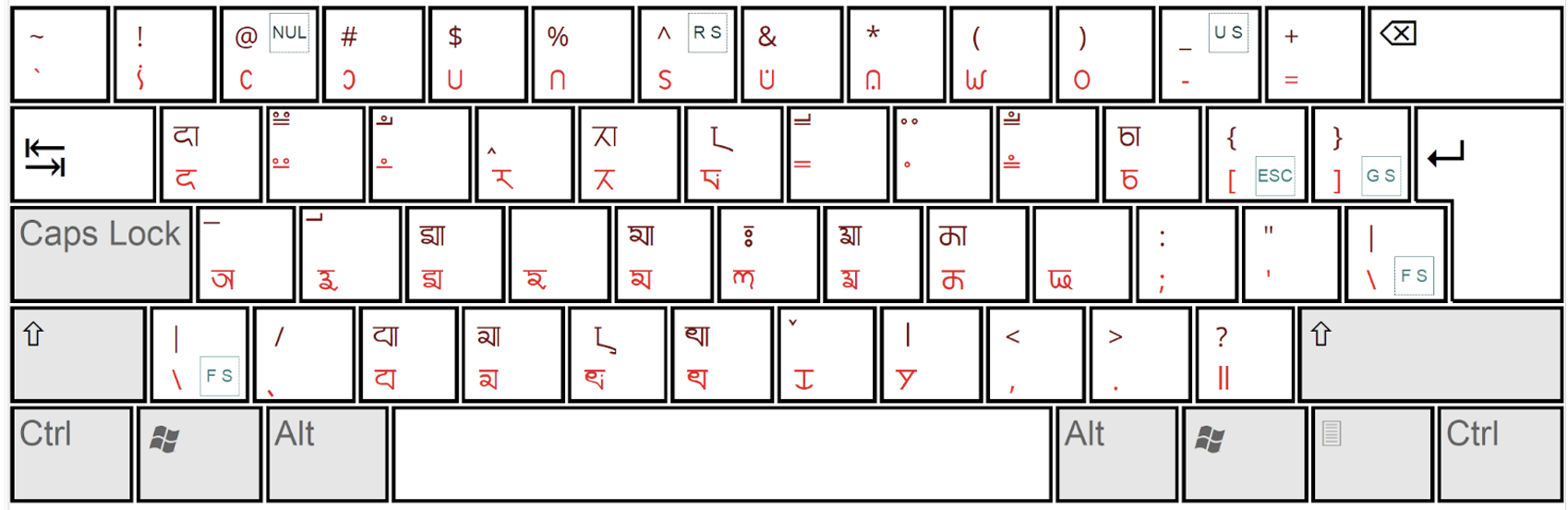
Image courtesy of JamraPatel
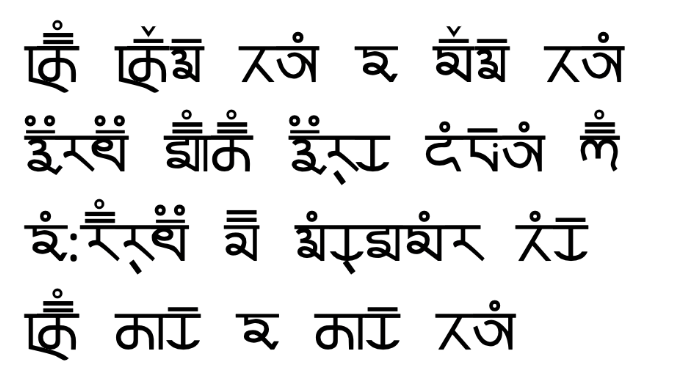
Image courtesy of JamraPatel
Milestones in Gurung Language Preservation
Translation Commons and the Gurung community have worked together to develop digital tools, educational resources, and training programmes that support the long-term preservation and growth of the Gurung Khema script.
1. Developed Unicode-Based Fonts and a Keyboard
Translation Commons contributors Mark Jamra, Neil Patel (JamraPatel), and Craig Cornelius developed Unicode-based fonts and a keyboard beginning in 2025. These resources are now being distributed to the Gurung community, allowing Gurung Khema to be typed, shared, and used across computers, smartphones, and digital platforms.
2. Conducted Training-the-Trainers Workshops
During late 2025 and early 2026, Gurung community leaders organized Training-the-Trainers workshops across Nepal to promote literacy using the newly developed Unicode keyboard, fonts, and textbooks.
A two-day workshop in Lumbini Province trained 45 participants, including 13 women. Newly certified trainers later conducted a ten-day Gurung Language and Khema Script programme benefiting 65 participants, including 45 women and girls. Similar workshops are planned in Gandaki and Bagmati Provinces.
3. Pursued University-Level Certification
Ongoing efforts are focused on introducing postgraduate-level certification in the Gurung language and Gurung Khema script through a university in Kathmandu. The proposed Postgraduate Diploma in Gurung Language Teaching (PGDGLT) will help prepare future educators and strengthen language preservation through formal education.
4. Advanced Recognition in Media and Publications
The growing use of Gurung Khema in publications such as the Gurung edition of the Sikkim Herald, published on 17 July 2019, demonstrates increasing recognition and adoption of the script. With Unicode support now available, Gurung Khema is well positioned for continued growth in publishing, education, and digital communication.
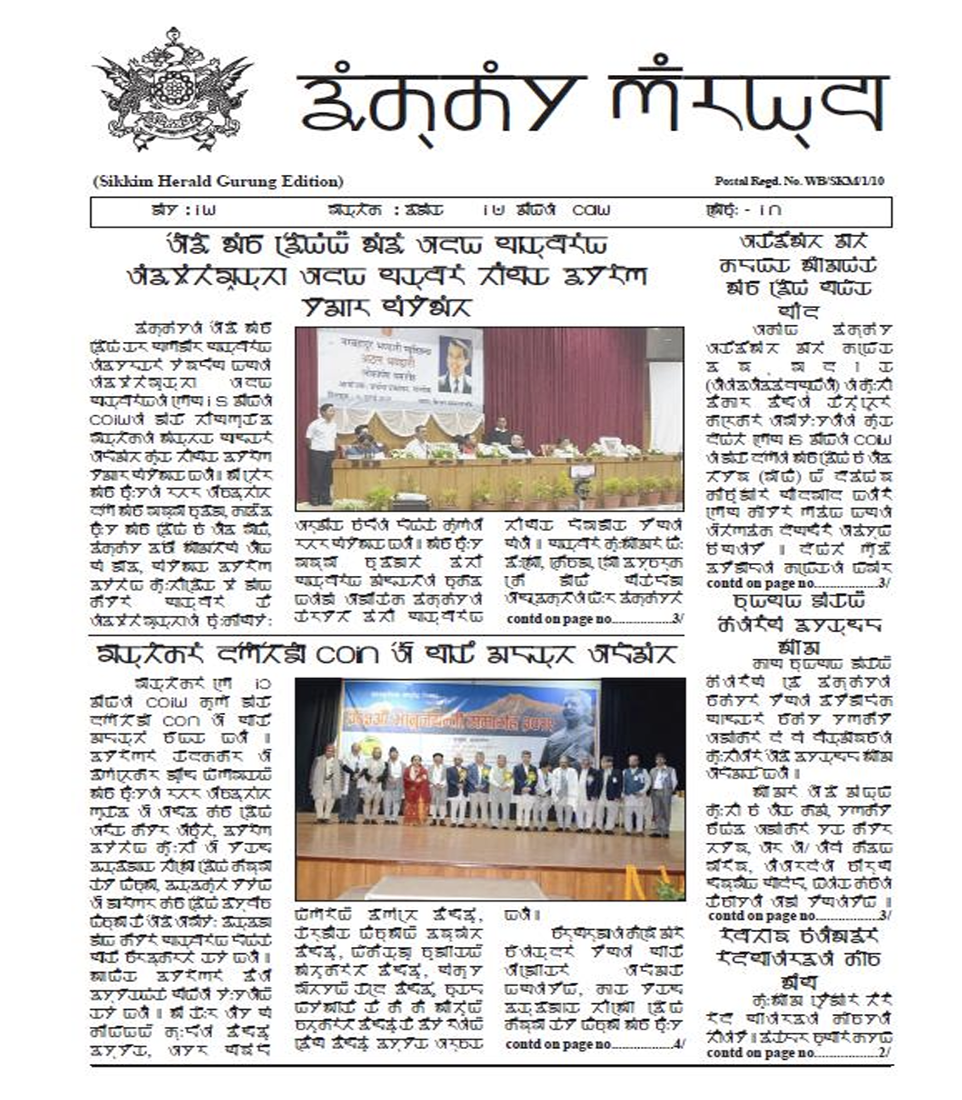
With Gratitude
The successful digitization of the Gurung Khema script has been made possible through the dedication of volunteers, software developers, linguists, educators, and community leaders. Their combined efforts have transformed the script from one at risk of digital exclusion into one that can now be used confidently across modern digital platforms.
Mark Jamra & Neil Patel
Designed the Unicode-compliant Gurung Khema font, making it possible for the script to be displayed consistently across websites, software applications, mobile devices, and operating systems while preserving its traditional visual identity.
Craig Cornelius
Developed the Gurung Khema keyboard, enabling community members to type in their native language on Windows, macOS, Linux, Android, and iOS devices using modern Unicode standards.
Translation Commons
Worked alongside the Gurung community to coordinate Unicode implementation, digital resources, educational materials, and community training that supports long-term preservation of the language and script.